Open letter to ‘Cedars’

Once upon a time, I was News Editor for Cedars, the bi-weekly student newspaper of Cedarville University. Times were fun, I learned how to manage people (and how not to manage them). I published a few grating opinions that didn’t receive much response because there wasn’t much participation in the newspaper.

But now I’m at Columbia College Chicago, and Cedars has been re-designed, re-staffed, and is rearing to go once again. I applaud their efforts to resist the anti-media culture that seeps from the school’s hallowed halls. (Or, rather, seeps from the schools trustees and donors, but I won’t get into that now.)

Still… surely they can do a better job than this.

Just now I inquired about whether they have separate websites for on-campus and off-campus viewers. Stooping that low for preemptive damage control is a sad possibility, but not the saddest part of the setup.

That’s just simply the journalism. (Update, 2:15 p.m. CT: Cedars staff confirmed, via a comment on their Facebook page, that only one version of the website exists. Hooray!)

I want to say something. Hmm…

I literally can’t find a way to contact them other than posting a message on their Facebook page, so I’ll have to post my open letter here for the time being. I wish I didn’t have to put it in the open, but them’s the breaks. I’ll take it down if I get a message from them saying they get the point. Here goes nothing, after the break…

Continue reading

Green campaign at my former school

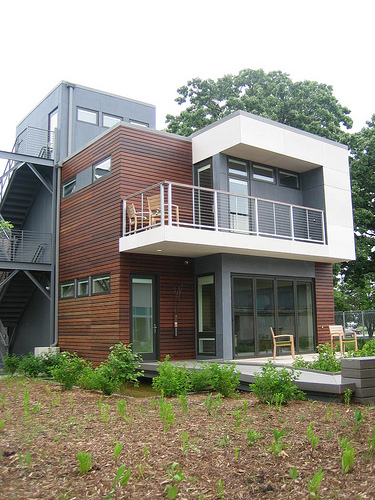
A prefab modular home with LEED Platinum certification. Chicago should have its first Platinum-certified prefab residence in 2011. (Flickr photo from Heather Lucille. CC.)

Here are some links to my 2009 project to reduce Cedarville University’s environmental impact. I was collaborating with school administration to implement the project when I moved to Chicago to attend a more well-known journalism school.

CU/Green on transportation

CU/Green on clothing and consumer goods

CU/Green on building upkeep and construction

CU/Green on water use and landscaping

CU/Green on good air and energy

CU/Green on our refuse

CU/Green on everyday stuff

Before I left Cedarville University in May ’09, I was one of the founding members—vice president—of the environmental organization on campus. I got that gig in part because of the extensive plan I had proposed, above.

The plan took into consideration what was feasible for the college’s budget at the time, as well as what was socially responsible. One thing I stressed for administrators was that once our campus learns how to weatherize buildings, we should go into our community and do it for lots of residents there, many of whom are poor. Why? Free labor from students, minimal expense from the college, savings that make a big difference for families, and massive PR.

We could even serve as a knowledge hub for the community about “green” choices, and as a pilot program for similar universities across the country, I demonstrated.

P.S. — Here’s a link to an article on colleges who have voluntary student-funded offices of sustainability. Here’s a link to the only organization that evaluates colleges’ efforts toward sustainability and transparency, something the group considers essential to continuing sustainability.

Fridge project, follow me elsewhere

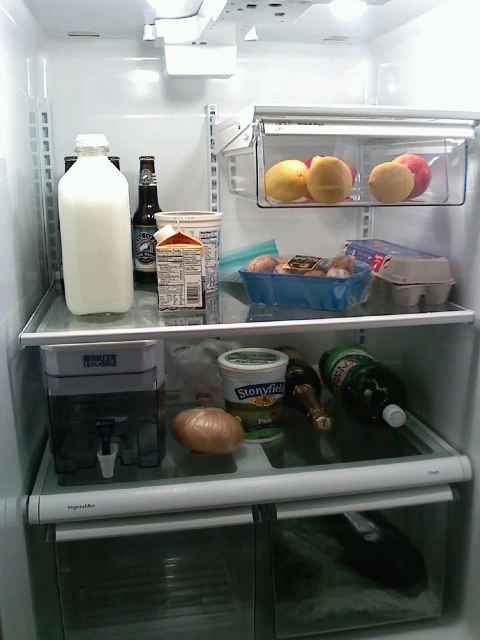
The inside of my fridge, shot with my cell phone.

For Mobile Journalism class I’m embarking on a project to photograph my fridge at least 3 times a week. It was inspired by a similar project in Orion Magazine. Find my work at fridge.posterous.com.

Also, a warning: I don’t often update brandonsmith.com, as you know. But I do update my Facebook and Twitter feeds several times a day. If you want to keep closer tabs on me, I suggest you check there. (My Twitter’s overarching theme is the environment, but I also inject thoughts about journalism, food, and communications tech. Naturally, Facebook’s a bit more about my personal life.)

Developments: Arianna and iPad

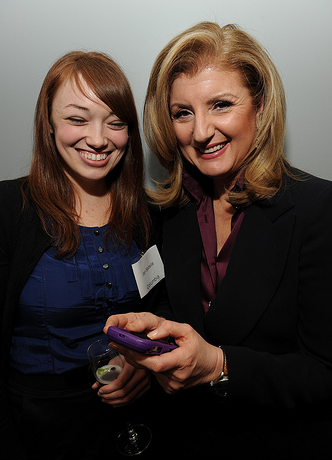
Arianna Huffington, right, has some mobile fun with a Columbia College Chicago student following her student-only conversation with us Wednesday, prior to her official speech. Huffington is the proprietor of Huffington Post, one of the biggest media brands on the Internet. (The photo’s by Columbia’s PR staff, but if they sue a student for the use of it, I’ll have something great to blog about)

Spring term finally started here at Columbia, and I’m back in the grind. When I have a lot of stuff to do, things mysteriously get done. I don’t know how it happens.

Two recent publishable items of mine: 1. I liveblogged Arianna Huffington’s conversation and Q&A with students Wednesday. It appeared on my Twitter feed, twitter.com/greenletters. (A transcript of it appears after the jump.) 2. I wrote tech commentaries on the iPad Thursday evening for two dailies in Ohio and The Columbia Chronicle.

Check the Chronicle’s Arts and Culture section to read my student-centric piece starting Monday morning. I’ll post a text version (and maybe PDFs) of what appeared in the dailies as soon as I can. I hear they were published Saturday.

Continue reading

Geohashing

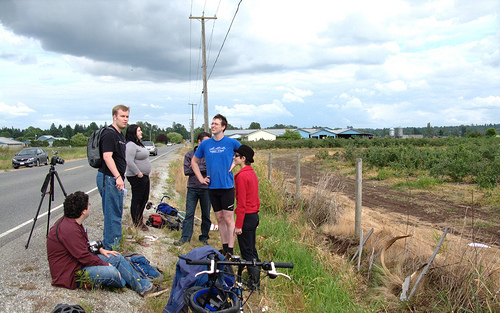
“Now what?” This group of people found themselves at the same semi-random location in the middle of the British countryside one afternoon. Maybe they went to a pub! (Creative commons photo from the Flickr account of Yang “yangman” Zhao)

Imagine it: You want to meet new people and see new places. Whereas before, you’d maybe look up something to do in your local travel guide, or read the newspaper, or visit a travel agency… now things are totally different.

Now, for all intents and purposes, you throw a dart at a map and go to that place. (We want REAL adventure!)

What’s insane is that, at this exact random location, other people are going to be there. And, because you share the same sense of adventure—and in this case, the same nerdiness—you’ve just found yourself a new best bud or two, or a new significant other.

Screw bars. This rocks.

It’s called geohashing, and it’s the wave of the future, my friends. The Internet has become our extended reality, and in this instance, we’re simply reversing the roles: we’re using computers as our “home base” and extending our entertainment and socialization into the real world from it. This was inevitable; now it’s here.

Continue reading