Jeffrey Hollender on Toyota

13782289-566x849The Toyota Corolla, a highly popular car in the U.S. (Jupiter Images photo)

I’m into corporate responsibility in case you haven’t noticed. (I was recently approached by someone wanting me to join a pyramid scheme. It was so laughable I wrote a satire piece about it. I’ll let you know when it’s published.)

One of the biggest proponents of this is Jeffrey Hollender, the CEO of the cleaning-products company Seventh Generation.

I looked into his recent blog posts because I noticed something about Toyota’s CEO in the Seventh Generation newsletter. Hollender, referencing a New York Times article, said it’s about time leaders of a corporation really owned up to their mistakes instead of denying blatant facts and blameshifting, like GM often does. (Ever seen Who Killed the Electric Car? It’s free at that link.)

Continue reading

Who are these corrupt scientists? Leachates nearly unavoidable

Glad uncut

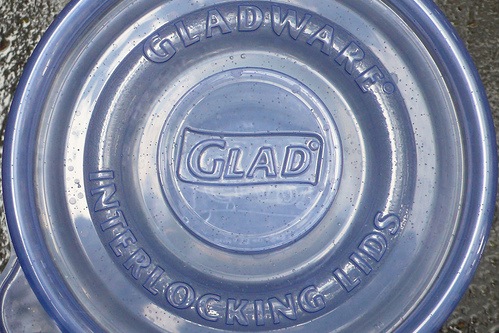
Gladware, the type of food storage I have at home. I’ve heard soft plastics are more prone to have dangerous leachates, and this stuff is as soft as you get. (Creative Commons-licensed photo from Timothy Valentine’s Flickr account)

Nick Kristof’s column Saturday dealt with Bisphenol-A, the chemical lots of people are worried about because, hey, who knows whether it’s dangerous. Some scientists have done studies saying it is; other scientists, funded by companies that use BPA, say it’s not.

Oh no, who to believe?

I think the real story here is that so many corrupt scientists are still working. Who can live with themselves after doing “research” for corporations that concludes unsafe products are safe? Don’t they take the equivalent of the Hippocratic oath when they become scientists? Is there an effort to put something like it in place? Or are these people taught to worship money?

Continue reading

Consumerism as conspiracy (and I believe it!)

3756960013_8962114569

The interior of the Sherlock Holmes Museum on Baker Street. In the Victorian style, it's cluttered with stuff. (Creative Commons-licensed photo from the Flickr account of practicalowl)

Here’s an article written by a professor in my academic department, Sharon Bloyd-Peshkin. I haven’t yet had her in class; she’s on sabbatical this semester.

In this she’s written the most complete, historically accurate magazine-format depiction of planned obsolescence I’ve ever read. And I’ve read several great ones.

Planned obsolescence is, in my own words, designing something to wear out, give out, or otherwise become unusable or out of style after a certain amount of time. Which prompts the consumer to buy another.

It hasn’t always been around; in fact, it has only governed business practices in the last 80-90 years, and, arguably, the vast majority of it has popped up in the last 40 years.

In my opinion, it’s dishonest. In most cases, we (well, industrial engineers) know how to make stuff last, say, ten or a hundred times as long as it “normally” lasts in our experience. Why don’t we? People like to make money.

Obviously it’s destroying our planet, and to a certain extent, our souls, if you believe in that kind of thing. I like good product design as much (and probably a lot more) than the next guy, but what happens to our humanity if we’re never satisfied with what we have?

One man asked that and came up with the “100 Thing Challenge,” where he sold, donated, or put into storage all his possessions except a carefully-chosen 100 things—for one year. He got coverage by Time magazine online and now has a book deal with Harper Perennial.

My sister today said something like “I’m against the production of new stuff.” She thinks the world has everything it needs, and if we just passed it all around—Freecycle, that sort of thing—we’d all be better off.

I’m not there yet, but I’m on my way.

First Daily Blank piece

vendetta masks

Masks that supposedly resemble the visage of Guy Fawkes, make popular in the movie V for Vendetta. (Photo from The Daily Blank)

Today I was published at The Daily Blank, Chicago’s only satire site that focuses on local issues.

For your enjoyment I’ll paste the entire article below, because their licensing allows it. Enjoy! …And I have one more piece in the queue, so look out.

Daley to ‘pull an Obama’ to fund CPS

In two about-face moves Tuesday, Chicagoans banded together to stand up to the Daley administration, and the Mayor decided to listen to the majority voice of the people.

Following a protest, Mayor Richard M. Daley issued an edict that every corporate executive who had received preferential treatment under the TIF program would voluntarily cut his or her income by 90 percent.

The mayor did not say what the consequences would be if said executives disobeyed, except that “the shit will hit the fan,” he told the throngs of cheering lower-middle-class people before him.

Continue reading

Today’s link

Here’s a link to a short article about how common houseplants can be very effective at filtering the air indoors: roughly the same quality filtration as human-built devices costing ten times as much. (Their source wasn’t the University of Georgia study directly, but Science Daily.)

Of the 28 species tested, Hemigraphis alternata (purple waffle plant), Hedera helix (English ivy), Hoya carnosa (variegated wax plant), and Asparagus densiflorus (Asparagus fern) had the highest removal rates for all of the VOCs introduced.

Also these plants were suggested for their capacity to remove the chemicals in parenthesis:

green spider plant (formaldehyde)
peace lily (benzene)
gerbera daisy (trichloroethylene)
areca palm (capacity to be a humidifier)